

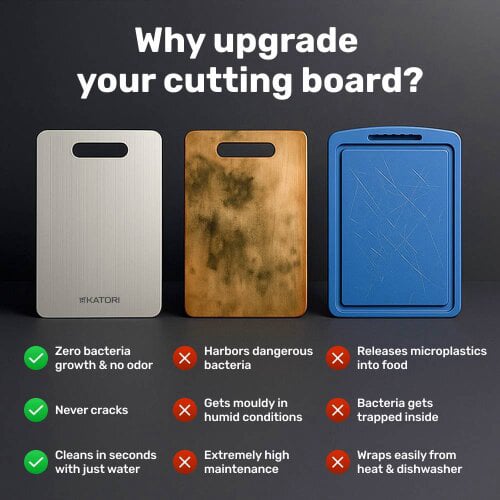


Yes. Titanium cutting boards are made from food-grade, non-reactive metal that does not absorb liquids, harbor bacteria, or release harmful substances into food. They are commonly used in medical and culinary applications due to their safety and hygienic properties.
No, when properly engineered, titanium cutting boards are designed to be softer than standard kitchen knife steel. This helps protect blade edges while still providing a firm, stable cutting surface. Using normal slicing motions will not significantly dull your knives.
Yes. Titanium is non-porous, meaning it does not trap moisture, food particles, or bacteria like wood or plastic boards can. Because bacteria have fewer places to hide, routine washing with soap or a dishwasher cycle is usually sufficient to keep the board clean.
Most high-quality titanium cutting boards are fully dishwasher safe. Titanium resists heat, corrosion, and warping, making it easy to clean without oiling, soaking, or special maintenance.
While titanium cutting boards cost more upfront than wood or plastic options, they are built to last for many years. Their durability, low maintenance, hygienic surface, and resistance to wear often make them a more cost-effective long-term investment.